

By Mukesh Chandra, Career Counsellor and Study Abroad Consultant with over 12 years of experience. Last checked 2 November 2026.
The short answer
Rome is one of Europe’s cheapest capitals for a degree. Public universities charge non-EU students roughly €1,000 to €4,000 a year, depending on a family-income calculation called ISEE, and living costs are about €800 to €1,100 a month. The visa funds requirement for 2026–27 is about €6,947 for the academic year, roughly ₹7.5 lakh, though Italy has tightened its financial checks.
What it costs to study in Rome
| Item | Figure | Source |
|---|---|---|
| Public university tuition for non-EU students | About €1,000 to €4,000 a year, income-based | Leverage Edu and other summaries. Check each university |
| Private universities and specialist schools | About €5,000 to €25,000 or more a year | Nomad Watch and Leverage Edu |
| Visa funds for 2026–27 | About €6,947.33 per academic year, excluding accommodation and a return flight | Italian government guidance, as cited by Migaku |
| Shared room in Rome | About €400 to €600 a month | WhereToEmigrate city comparison |
| Total student budget in Rome | About €800 to €1,100 a month | WhereToEmigrate |
| Long-stay (Type D) visa fee | About €50 | ICEF Monitor |
At about ₹108 to the euro, a year in Rome typically costs ₹11 lakh to ₹18 lakh including living costs for a public university. Reports say Italy introduced stricter financial requirements for the Type D student visa for 2026–27 and 2027–28, so confirm the exact amount and how funds must be shown with your consulate before applying.
What the Italian student visa requires
Non-EU students must first complete pre-enrolment on the Universitaly portal, then apply for a Type D long-stay visa at the Italian consulate, showing admission, proof of funds, accommodation and health insurance. After you arrive you apply for a permesso di soggiorno. Check the Italian embassy’s current student-visa checklist for India.
Universities in Rome and who they suit
- Sapienza University of Rome is one of Europe’s largest universities, with strengths across engineering, architecture, humanities, sciences and medicine.
- Roma Tre University is a mid-sized public university known for law, economics, humanities and architecture.
- University of Rome Tor Vergata has a large science, engineering and medicine presence south-east of the city.
- LUISS Guido Carli is a private university specialising in business, economics, law and political science, with higher fees.
- Specialist schools such as IED Rome offer design and creative degrees.
Where to live
| Area | Who it suits | What to expect |
|---|---|---|
| San Lorenzo and Tiburtina | Sapienza students | Lively student district next to the main campus, with busy nightlife. |
| Ostiense and Garbatella | Roma Tre students | Mixed residential and creative area with good transport. |
| Tor Vergata and the south-east | Tor Vergata students | Cheaper rooms, more distance from the centre. |
| Trastevere, Monti and the historic centre | Students who can pay for central living | Very atmospheric and noticeably more expensive. |
Regional student agencies may offer housing and grants, but places are limited and often need early applications. For private rentals, view the room first and never pay before checking the landlord.
Getting around
Rome’s metro has only a few lines, so buses and trams do much of the work, and delays are common. Student transport passes are inexpensive, at roughly €20 a month, though you should confirm the current price. Many areas near campuses are walkable.
Working and staying on after your degree
Non-EU students with a study permit can work up to 20 hours a week, capped at 1,040 hours a year. After graduation you can apply for a job-seeking residence permit of up to 12 months, and since 2023 the move from a study permit to a work permit is exempt from the annual quota. Confirm the latest rules with Italian immigration authorities.
Who Rome suits, and who it does not
It suits students who want low tuition, a rich cultural setting, and who can handle Italian bureaucracy and some language learning. It is a weaker fit if you need smooth, fast administration, if you want strong English-taught depth outside a few fields, or if you want a large, well-paid graduate job market for English speakers.
Frequently asked questions
How much does it cost to study in Rome?
Public tuition is roughly €1,000 to €4,000 a year for non-EU students, and total living costs about €800 to €1,100 a month.
How much money do I need for the Italian student visa?
About €6,947 per academic year for 2026–27 according to Italian guidance, but confirm the current figure with your consulate.
Can I work while studying?
Yes, up to 20 hours a week and 1,040 hours a year.
Can I stay after I graduate?
Yes, with a job-seeking permit of up to 12 months.
Do I need Italian?
Not for English-taught degrees, but Italian is very useful for daily life and part-time work.
Sources: Italian government visa guidance as cited by Migaku and Unipage; Leverage Edu, Nomad Watch and WhereToEmigrate cost summaries; ICEF Monitor.
Planning to study in Rome?
Get one-to-one advice from Mukesh Chandra on universities, scholarships, visa funds and housing. Students and parents are both welcome.
More Study Guides for Italy
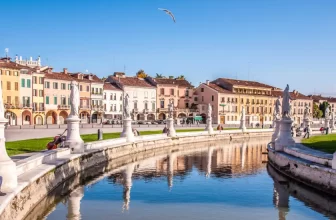
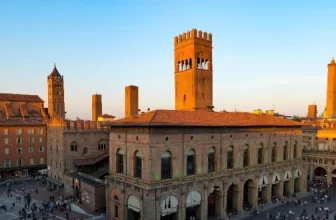
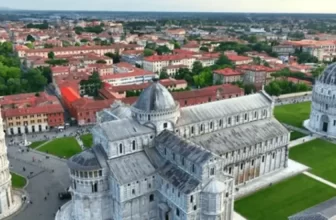
Comparing Italian cities? Read our guides to studying in Milan, studying in Bologna, studying in Padua and studying in Pisa, or browse all our Italy city guides.
About the author: Mukesh Chandra is a seasoned Career Counsellor and Study Abroad Consultant with over 12 years of professional experience in career guidance, international education, and student counselling. He brings extensive knowledge of global education systems, university admissions, course selection, and international study opportunities. Through his expertise and strategic guidance, he empowers students to make informed academic and career decisions and navigate their journey towards achieving global educational aspirations. Connect with Mukesh Chandra on LinkedIn.