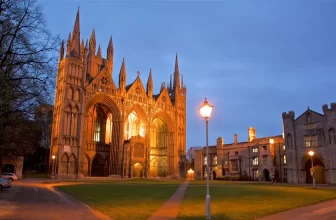


The first thing that hits you when you arrive in Exeter-assuming you’ve just stepped off the train and not slept through the whole ride-is the quiet. Not silent. Just… calm. Birds, distant church bells, and that very British kind of urban hush only broken up by an occasional “Mind the gap” echoing faintly behind you.
It was early September for me, slightly chilly but not freezing. I remember stepping out of Exeter St David’s Station with my suitcase dragging awkwardly behind me. That first breath had a crisp smell-kind of a mix between old books, damp stone, and roasted coffee drifting over from a café nearby. Don’t ask how coffee smells like seriousness, but it does here.
Visually? Rolling hills wrapped around a small but totally alive city. One minute you’re standing among Gothic buildings, the next you’re walking by indie shops wrapped in fairy lights.
Honestly, I panicked just a bit. I was hundreds of kilometres from home, about to start my first semester, and completely unsure if I had made the right call. But give it a couple of days. The thing about studying in Exeter is that it grows on you, subtly. By the end of the first week, you’ll know which corner shop sells the cheapest snacks and where to get a flat white for under £3.
Why Study in Exeter in 2026?
The UK continues to improve global access for international students with the Graduate Route visa (2 years post-study work rights), easier visa processing via digital student visa routes launched in 2025, and more focus on employability even for international grads.
Exeter might not be the first city you think of when you say “study abroad”… but that’s kind of the point. It’s got the academic reputation of a top-tier UK destination without the chaos or overwhelming price tag of somewhere like London. Plus, the University of Exeter ranks consistently in the UK top 15 (Sunday Times, Guardian), and was recently listed in the global top 150 for Environmental Sciences and Business.
More than just academics, Exeter gives you:
- A calmer, safer environment to focus on your studies
- Access to major industries: Renewable energy, environmental research, data science, medicine
- A growing international student population (about 6,000 international students) with support to match
- A direct train to London in 2.5 hours-but also Dartmoor and beaches 30 minutes away when you want quiet
And 2026 specifically? Well, with the UK redefining immigration and post-study employment rules, applying now gives you the chance to capitalize on new policy benefits before more congestion hits in future intakes.
Bottom line: Exeter might not scream “big city energy”, but it’s smart, strategic, and surprisingly international for its size. Think green, safe, affordable, well-connected-ringing the bell for anyone planning serious academic or career moves.
Why Is Exeter Important for International Students?
Let’s dive into it-why should international students care about Exeter?
Statistically, it’s small-ish. Exeter has roughly 130,000 people, out of which about 25-30,000 are students, and around 6,000 are international (and growing). That’s a big ratio-which means students matter here. You’re not just another number lost in a city maze.
The University of Exeter is the main academic hub, but honestly, the whole city feels built around students. Almost every café, library, gym, and co-working space has a discount or a version tailored for students. And the university knows you’re coming from different systems-there are international-specific support teams, visa and finance advisors, and free English language workshops if you need to refine your academic writing.
Industry-wise, the area’s no joke either:
- Exeter is building links with the NHS, Amazon, Met Office (UK’s national weather and climate service), and growing FinTech and data-driven businesses.
- There are collaborative programs in place with renewable energy companies, especially targeting students doing MScs and PhDs.
A Nigerian bioengineering student I met last year told me the quietness of Exeter helped her stay focused, but she also said the career fairs and employer chats were better organised than in some bigger cities she’d visited.
Real talk? Exeter is that place where you may not get flashy lights, but if you’re here to build something-career, research, even just yourself-it delivers.
Top Universities and Colleges in Exeter
Let’s not pretend Exeter is crawling with universities. It’s not. But what it does have is quality over quantity. Here are the top academic institutions in the city (and one or two just outside).
University of Exeter
- Ranking: Top 15 UK (Guardian 2025), Global Top 150 for multiple disciplines
- What it’s known for: Environmental Science, Sports Sci, Business, Psychology, Renewable Energy Engineering, Humanities
- Tuition (international): Undergrad: £17,500–£26,000 | Postgrad: £21,000–£30,000
- Student life vibe: Academic, slightly posh, eco-conscious but grounded
- Campus feels: Two big campuses-Streatham (main) is built like a botanical garden, complete with ponds and trees everywhere. St Luke’s is smaller, more preserved, used mostly by health and education students.
Exeter College
- Type: Further education | Foundation pathways | A-levels | Vocational training
- Good for: Students not yet ready for full undergrad
- Tuition: £11,000–£14,000 per year
- Fun fact: Links with UoE and other UK unis for progression programs
The University of Law – Exeter Campus
- Focus: Business, Law, and Criminology
- Style: More intimate, intense classes, great staff-student ratio
- Fees: £17,000–£20,500 depending on program
- Best for: Law students looking for a corporate career track
Top Student Accommodation Properties in Exeter
Finding International student accommodation in Exeter is totally manageable-but you’ve got to act early. Here are the places everyone talks about:
Lopes Hall (University Hall)
- Cost: From £155/week
- Includes: Utilities, Wi-Fi
- Proximity: On-campus, 5-min walk to lecture halls
- Pros: Peaceful, traditional, beautiful garden space
- Cons: Shared bathrooms; bit old-fashioned
- Booking tip: Uni residents usually fill by March for September
The Depot
- Cost: £179–£199/week
- Private provider: Modern, studio-style
- Includes: All bills, gym access, large shared areas
- Near: Streatham campus (10-minute walk)
- Con: Can feel “too quiet” for social butterflies
iQ Student Accommodation – Exeter
- Cost: £170–£245 (depending on room style)
- Perks: Private ensuites, social events, high security
- Location: City centre (walk to both campuses)
- Pro tip: They give early booking discounts
Shared Flats (Mount Pleasant or Pennsylvania Road)
- Cost: £400–£600/month
- Best for: Returning students or those wanting independence
- Pros: Freedom, budget-friendly
- Cons: Bills may be separate, condition varies a LOT
Popular Student Areas in Exeter
Looking for the best neighborhoods for students in Exeter? I’ve lived in one, visited all. Here’s the breakdown.
Pennsylvania
- Vibe: Suburban, leafy, very student-centric
- Rent: £450–£600/month
- Pros: 10-min walk to campus, peaceful
- Con: Uphill-literally (you’ll feel it on a Monday morning)
Mount Pleasant / Heavitree
- Vibe: Affordable and slightly older homes, near local shops
- Rent: £400–£550/month
- Near: 15 min walk to St Luke’s, 25 min to Streatham
- Perk: Solid mix of locals and students
City Centre
- Rent: £600+ for fancy studios
- Perks: Close to everything-cafes, shopping, nightlife
- Con: Noisy, expensive, less “studenty”
St Thomas
- Across the river
- Quieter, more residential
- Rent: £450–£500
- Ideal for keeping life simple and peaceful (but further from campus)
Cost of Living in Exeter
| Category | Monthly Cost (GBP) |
| Accommodation | £500–£800 |
| Groceries & Food | £120–£180 |
| Transport (Uni Bus) | £45 max (student pass) |
| Phone + Internet | £25–£35 |
| Social + Fun | £80–£150 |
| Books/Supplies | £20–£60 |
| Health Insurance | NHS surcharge paid via visa |
| Miscellaneous | £50 |
| Total | £900–£1,300 |
Tips & Hacks:
- Use Unidays and TOTUM for discounts
- Shop at Aldi, Lidl, and Tesco Extra
- Get a university bus pass instead of paying daily
- Share housing with international flatmates-you’ll learn more, spend less
Scholarships and Financial Aid
Let’s talk money-because even if Exeter is cheaper than cities like London, UK tuition and living costs add up fast. So here’s what’s actually available if you need help footing the bill.
University of Exeter Scholarships (2026 Entry)
- Global Excellence Scholarships
- For high-achieving international students
- Worth up to £10,000
- Based on academic merit
- Apply shortly after receiving your offer
- Sanctuary and Access Scholarships
- For refugees, asylum seekers (or eligible migrants)
- Includes both tuition and living cost support
- Business School Scholarships
- Available if you’re applying to postgraduate Business programs (competitive)
UK Government Options
- Chevening Scholarship
- 100% funding for postgrads-tuition, flights, living stipend
- Leadership potential required (super competitive)
- Commonwealth Shared Scholarships
- For students from eligible countries studying select courses at Exeter
External + Little-Known Options
- Erasmus Mundus Scholarships
- If you’re doing a joint degree (often Masters)
- EduFunding, Scholarships for Development, Postgraduate Search
Pro Tips:
- Start early-most scholarship deadlines hit in January–March
- Customize every personal statement and reference letter (no copy-paste)
- Mention specific Exeter modules, professors, or goals in your scholarship essays
And yes, students actually get these. Just not the night before the deadline.
How to Apply – Step-by-Step Guide for 2026
Applying to study abroad in Exeter isn’t hard, but there are a lot of moving pieces. Here’s how to not mess it up.
1. Research and Shortlist (Sept–Nov 2025)
- Use UCAS (undergrad) or direct uni portal (postgrad)
- Compare course structures, rankings, and tuition fee structure
- Look at language requirements (IELTS / TOEFL / Duolingo)
2. Prepare Your Documents
- Valid passport
- Academic transcripts (official + translated)
- SOP/personal statement
- References (2)
- Proof of English Language Proficiency
3. Write Your Personal Statement
Here’s where folks freak out. Keep it simple:
- Why Exeter?
- What makes you a good fit for the program?
- What are your long-term goals?
Be honest. Not perfect.
4. Submit Applications
- Undergrad via UCAS by Jan 31, 2026
- Postgrad: rolling deadlines, but earlier = better
- Pay the app fee (£20-50 usually)
5. Wait, Accept, Deposit
You’ll get either:
- Conditional Offer (pending IELTS or final grades)
- Unconditional
Then:
- Accept your offer
- Pay your deposit (~£3,000–£4,000) to secure your place
6. Visa and Work Rules in 2026
Okay, here’s the part that sounds scary, but isn’t.
UK Student Visa Application Process (2026):
- Secure your offer + CAS (Confirmation of Acceptance for Studies)
- Show proof of funds:
- Tuition + £1,023 per month living costs (for up to 9 months)
- Take a TB test (some countries only)
- Pay visa fee = £490
- Pay IHS surcharge (healthcare) = ~£776/year
Processing Time
- 3–6 weeks standard
- There’s a priority option if you need it faster
Common Mistakes to Avoid
- Showing bank balances without 28-day consistency
- Late document uploads
- Booking first flights before visa approval-don’t
Working During Studies
- You’re allowed to work up to 20 hours/week during term
- Full-time in summer/holidays
- Exeter uni posts part-time jobs on the internal portal – they go fast
Post-Graduation Options (Graduate Route Visa)
- Stay in the UK for 2 years after your degree (3 years if PhD)
- No sponsorship needed-it gives time to find work, internships, or freelancing gigs
Don’t stress this step. Just be organized, keep copies of everything, and use your uni’s international office support.
Local Transport Facilities for Students
Exeter’s compact size works in your favour. You won’t need a car, and walking is genuinely doable. Still, here’s what you need to know.
Bus Travel
- Main bus: Stagecoach Southwest
- Student pass: ~£40/month
- Covers unlimited rides within city zones
- Buy passes on the app or student desk during Welcome Week
Walking / Biking
- Streatham Campus to city centre = 15 mins walk
- Rentable bikes via Co-Bikes
- Exeter is super walkable but… hilly
Apps to Download
- Stagecoach App
- Google Maps or Citymapper
- Exeter Uni Student App (for shuttle schedule)
Safety After Dark
- Taxis are reliable, or book an Uber
- Campus security offers safe walk-home assistance for late events or library sessions (yes, a real thing)
Student Life, Food Culture, and Day-to-Day Vibes
This isn’t just about courses. So what’s student life actually like?
Daily Life
Most students have:
- 2–4 hours of class per day
- Study gaps filled with coffee shops, campus sports/gym, or group projects
- Free time? Hit the Forum (main student hub), go watch a film at Picturehouse, or hike down to the River Exe
Campus Culture
- Not as cut-throat competitive as some London unis
- Professors tend to be accessible and informal
- Tons of societies-Anime club, Politics debates, Indian Society, Salsa nights
Where Students Eat
- RAM Bar (cheap pub food on campus)
- Exeter Street Food Market (pops up weekly near the cathedral)
- Student faves like Pho, Hub Box, Wagamama, and £3 meal deals at Boots/Tesco
Coffee Culture
- Artigiano (coffee + student laptop zone)
- Pink Moon (group brunch hangouts)
- The Glorious Art House (if you want quirky, artsy vibes)
Cultural Shocks?
- British sarcasm? It’s real.
- Weather? Grey, rainy-but bearable
- Most dorm kitchens come with kettles but barely any freezer space. True story.
Internship and Career Opportunities
Careers don’t just show up-you’ll have to work for them. But Exeter’s support systems actually work if you engage early.
Top Industries Hiring in Exeter:
- Renewable energy
- Healthcare (connection with NHS)
- Business and FinTech
- Environmental policy + consulting
- Education and research
Where to Find Internships
- Uni’s Career Zone portal
- Handshake, RateMyPlacement
- Career Fairs (2x a year at Forum Building)
- LinkedIn (follow “University of Exeter” jobs tab)
Paid vs Unpaid
- Unpaid internships = mainly research and summer labs
- Paid = Sparser in first year, but opportunities increase by second year or postgrad level
Networking Tips
- Go to employer events even if you’re unsure
- Ask for coffee chats at events-people love talking about themselves
Short-Term Study Abroad Options
Not everyone wants the full 3–4 years. Here’s what’s possible short-term.
Summer/Winter Schools @ Exeter
- 2 to 6 weeks
- Themes: English Language, Heritage, Sustainability, Business Innovation
- Cost: ~£1,500–£2,000 excluding housing
- Includes weekend trips, cultural excursions, dorm stays
Exchange Students
Exeter partners with schools in:
- US, Canada, Australia, Hong Kong, Europe
- Popular for business and humanities students
Application Process
- Simple form + transcript + motivation letter
- Some courses may require recommendation letters
Great if you want to “sample” the UK without committing to full study.
Application Timeline for 2026
| Month | What To Do |
| Nov 2025 | Shortlist programs, start IELTS prep |
| Jan 31, 2026 | UCAS deadline (undergrad) |
| Feb–Mar 2026 | Postgrad app peak time |
| Apr–May | Accept offers, pay deposit |
| May–July | Apply for visa, book flights & housing |
| August | Pre-departure sessions + packing chaos |
| Sept 2026 | Arrive in UK, Welcome Week in full swing |
Public vs Private Universities Comparison
| Feature | University of Exeter (Public) | Private Options (e.g., Univ. of Law) |
| Tuition (UG) | £18,000–£26,000 | £17,000–£20,500 |
| Class Sizes | 50–200 | 20–60 |
| Prestige | High (UK-wide + Global) | Limited to Law/Business |
| Research | Significant | Minimal |
| Experience | Full-campus vibe | More focused, corporate feel |
| Scholarships | Broad, merit + need-based | Fewer options |
Final Thoughts – Why Exeter is the Perfect Study Destination
Let me wrap this up the way I wish someone had told me:
Exeter is for students who are serious-but not stuck-up. It’s for people who want balance: green space, strong academics, fewer distractions. You won’t get Big City thrills, but you’ll actually focus, grow, and maybe even find your people.
If you want:
- Peaceful surroundings
- High-value degrees
- Great student support
- Career-focused programs
…then trust me on this-Exeter delivers.
First-Year Mentor Tips:
- Don’t wait till Visa Confirmed to book housing
- Participate in at least one society every term
- Budget for rainy-day groceries-door delivery isn’t cheap
- Ask profs questions-they appreciate it
- Take a day trip to Dawlish or Dartmoor when overwhelmed
Top 10 FAQs about Studying in Exeter
Depends on lifestyle. Most students get by on £900–£1,300/mo including rent.
Yes, 20 hrs/week in term, full-time in breaks.
No, but you’ll learn it. “Cheeky pint”, “sorted”, “take the mick”-you’ll be fluent soon enough.
Super safe. It’s a small, student-focused city with low crime rates.
Expect grey skies, light rain, and a few golden days randomly. Pack layers and waterproof shoes.
Yes-Graduate Route visa = 2 years of job seeking/work.
Bring your BRP, passport, uni acceptance letter, and proof of address. Try Monzo, HSBC, Barclays.
Chill but active. Pubs over clubs. Societies, events, open mics-plenty to join.
Yes. Exeter offers multiple merit and need-based grants-apply early.
Now. Research in Autumn 2025, apply by Jan 2026 (undergrad) or Feb–Apr (postgrad).
Summary
Choosing to study in Exeter means choosing a well-rounded, deeply enriching life path. From its globally ranked universities to its tranquil green campuses and lively town streets, it checks all the boxes for the modern international student.
Exeter gives you academic excellence, cultural exposure, affordable living, and genuine work-life balance, all wrapped up in a safe, scenic British city you’ll grow to love.
Whether you’re here for three years or just a semester… Exeter will leave a mark.
Top 10 FAQs About Studying in Exeter
1. Is Exeter a good city for international students?
Absolutely. It’s safe, welcoming, and offers globally recognised education.
2. How much does it cost to live in Exeter as a student?
Expect monthly spending around £1,000–£1,300 including rent, food, and transport.
3. Can international students work while studying in Exeter?
Yes, most can work up to 20 hours during term time on a student visa.
4. What are the main universities in Exeter?
The University of Exeter is the main one, along with several respected colleges and language schools.
5. What’s the weather like in Exeter?
Mild and temperate. Think cool summers, rainy spells, and gentle winters, not too extreme.
6. How safe is Exeter for students?
One of the safest university cities in the UK, with low crime rates and friendly neighbourhoods.
7. What kind of accommodation options are available?
You’ll find student halls, private en-suites, studios, and homestays depending on your budget and preference.
8. Is public transport efficient in Exeter?
Yes. Buses and trains are well-connected, and biking is a popular option too.
9. Are scholarships available for international students?
Yes, especially at the University of Exeter. Availability varies by course and home country.
10. When should I apply for student housing in Exeter?
Start early, ideally six months before your course starts. The best properties get snapped up fast.